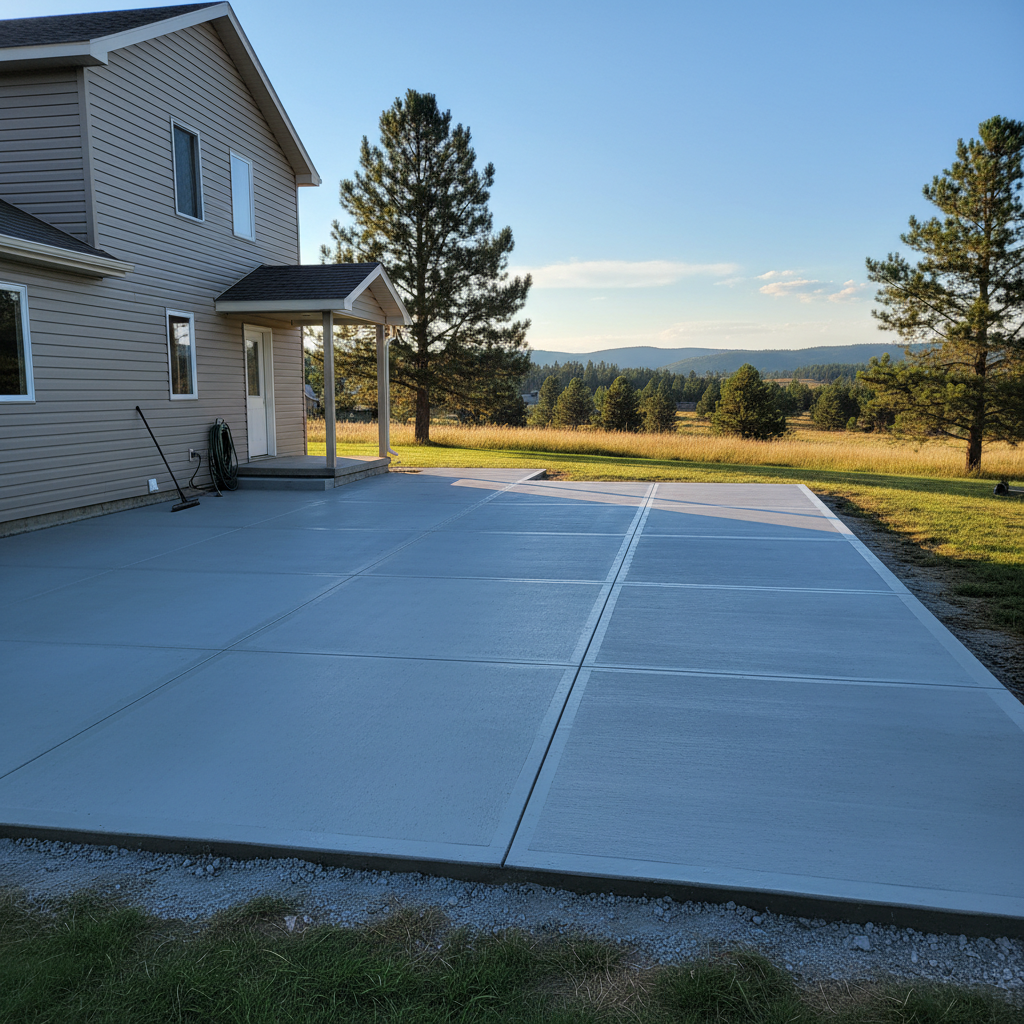
So, you're thinking about adding some new concrete flatwork to your property. Maybe a driveway, a new patio, or a sidewalk. Smart move! Concrete is tough, lasts a long time if it's done right, and definitely adds value. But the first question everyone asks, and it's a fair one, is always, "What's this going to cost me?"
It's not as simple as a flat rate per square foot, even though some folks might try to tell you that. Honestly, a whole bunch of things can push the price up or down. As someone who's been pouring concrete here in Great Falls for years, I've really seen it all. Let's dig into what you should expect.
What Makes Concrete Flatwork Prices Go Up or Down?
When I give you a quote, I'm not just pulling numbers out of thin air. We look at several key factors:
- Project Size and How Complicated It Is: This is probably the biggest factor. A small, simple 10x10 pad is totally different from a winding 100-foot driveway with curves and multiple turns. Bigger jobs naturally need more materials, more labor, and more time. Sometimes, though, larger projects can get a slightly better per-square-foot rate because we can work more efficiently.
- Site Prep: This one's huge. If your yard is already perfectly graded, that's fantastic. But if we have to yank out old concrete, dig out a bunch of dirt, or bring in fill to level things, that really adds to the cost. Especially with some of that clay soil we deal with around the Heights, proper sub-grade preparation isn't just a suggestion — it's essential if you want the concrete to last.
- Concrete Thickness and Reinforcement: Standard sidewalks might be 4 inches thick. Driveways? You'll want at least 4 inches, but 5 or 6 inches is often a much better bet for heavy vehicles. Then there's rebar or wire mesh. Rebar costs more, sure, but it gives you superior strength and helps prevent cracks. Most driveways, in my opinion, should have rebar, not just mesh.
- Finish Type: A basic broom finish is the cheapest option. Stamped concrete, exposed aggregate, or colored concrete all involve more labor, specialized materials, and a different kind of expertise, so they'll definitely cost more.
- Accessibility: Can our trucks and equipment get right to where we need to pour? If we have to wheelbarrow concrete a long distance, that means extra labor time, and yep, it adds to the cost.
- Current Material Costs: The price of cement, aggregate, and even fuel fluctuates. We don't control that, but it directly impacts what we pay to get concrete delivered to your site.
Typical Cost Ranges in Great Falls
Alright, let's talk some actual numbers. These are general ranges for Great Falls, MT, based on what I've seen over the years. Just remember, these figures are for professional, quality work, not some fly-by-night operation that might cut corners.
- Basic Broom Finish Concrete (4 inches thick, standard prep): You're generally looking at anywhere from $7 to $12 per square foot. This would be for a simple sidewalk or perhaps a utility pad.
- Driveways (4-5 inches thick, rebar, broom finish, good prep): Expect to pay $9 to $15 per square foot. The higher end of that range would be for more complex shapes, thicker pours, or tougher site access.
- Decorative Concrete (Stamped, Colored, Exposed Aggregate): This is where prices jump quite a bit because of the extra materials and skilled labor involved. For a stamped patio, you could be looking at $14 to $25+ per square foot, depending on the pattern, colors, and overall complexity. Exposed aggregate usually falls in the $12 to $20 range.
So, a 500 sq ft broom-finish driveway could run you $4,500 to $7,500. A 200 sq ft stamped patio might be $2,800 to $5,000 or more. These are just estimates, of course, to give you a ballpark figure.
What Should Be In Your Quote?
A good quote from a reputable company like Great Falls Concrete Paving should be clear and really detailed. Here's what you want to see included:
- Square Footage: The exact dimensions of the area being poured.
- Thickness: How thick the concrete will actually be.
- Reinforcement: What kind (wire mesh, rebar, fiber mesh) and how it will be placed.
- Sub-grade Preparation: Specifics on excavation, grading, and compaction.
- Concrete Mix Design: Strength (e.g., 3500 psi), slump, and any admixtures.
- Finish Type: Broom, stamped, exposed, etc.
- Control Joints: How and where they'll be cut to manage cracking.
- Sealing: If and when the concrete will be sealed.
- Cleanup and Disposal: What happens to the old concrete or excavated dirt.
- Warranty: What kind of guarantee they offer on their work.
If a quote just says "concrete driveway: $X," that's a huge red flag. You absolutely need the specifics.
How to Get Quality Work Without Overpaying
- Get Multiple Bids: Always get at least three detailed quotes. Don't just go with the cheapest option; compare what each contractor is actually offering.
- Check References and Reviews: Ask for past clients you can call. Look up online reviews, too.
- Verify Insurance and Licensing: Make sure they're properly insured (liability and workers' comp) and licensed. You definitely don't want to be on the hook if someone gets hurt on your property, do you?
- Don't Rush: Good concrete work takes time to plan and execute. Be wary of anyone who can start tomorrow and finish a big job in a single day.
- Understand the Contract: Read every single line. If you have questions, ask them before you sign anything.
- Don't Pay in Full Upfront: A reasonable down payment (maybe 10-25%) is common. The rest should be paid only after the work is satisfactorily completed.
Investing in concrete flatwork is a big deal, and you want it done right the first time. By understanding these factors and asking the right questions, you'll be much better prepared to get a fair price for a quality job that lasts for decades here in Great Falls.