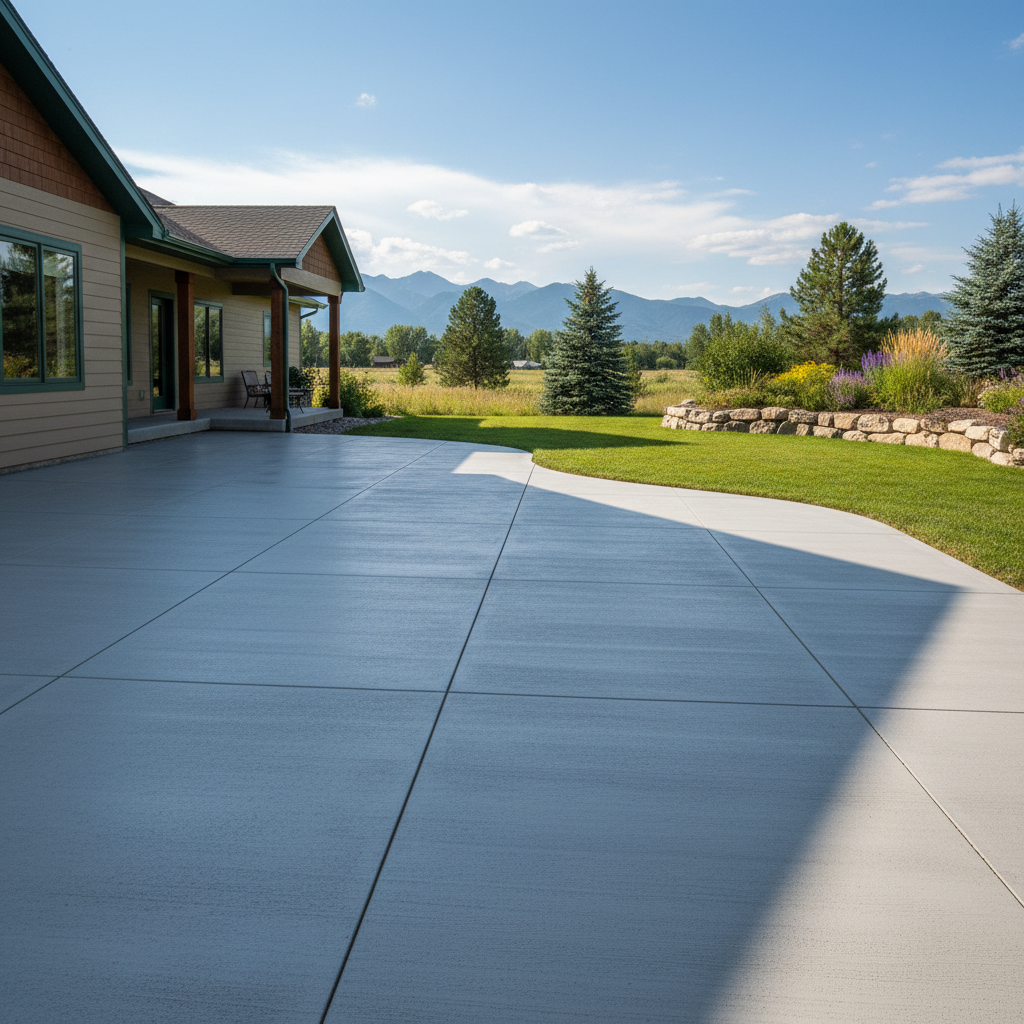
You've invested in a concrete patio, and you want it to last. That's smart. Here in Great Falls, our weather can be brutal on outdoor surfaces – from the scorching summer sun to the deep freezes and thaws of winter. A well-installed concrete patio from a company like Great Falls Concrete Paving is built tough, but even the toughest materials need a little looking after to truly go the distance. Think of it like your truck; you wouldn't just drive it without oil changes, right?
Regular Maintenance: Simple Steps for Long-Term Health
Keeping your concrete patio in top shape isn't rocket science, but it does require a little consistency. Most of it comes down to common sense and preventing small issues from becoming big ones.
Keep it Clean: This is probably the easiest thing you can do. Sweep off leaves, dirt, and debris regularly. Don't let organic matter sit and decompose on the surface, especially in shaded areas. That stuff holds moisture and can lead to mildew, moss, or even staining. For a deeper clean, a pressure washer on a low setting (1500-2000 PSI) with a fan tip works wonders. Just be careful not to hold it too close or blast away at one spot, especially if you have a decorative finish. A good scrub brush and some mild detergent (like dish soap) can handle most grime too.
Seal It Up: This is your patio's first line of defense against our harsh climate. A good quality sealer protects against moisture penetration, staining, and the freeze-thaw cycles that are so common here in Great Falls. I recommend resealing every 2-3 years, sometimes more often if your patio gets heavy use or is exposed to a lot of sun. You'll know it's time when water stops beading up on the surface and starts soaking in. It's not a hard job to do yourself, but make sure the patio is clean and dry before you start. Don't cheap out on the sealer; a quality product makes a huge difference.
Address Spills Immediately: Oil, grease, rust, pet stains – these can all leave permanent marks if left to sit. The quicker you clean them up, the better your chances of preventing a stain. For oil and grease, kitty litter or absorbent shop rags can soak up the bulk of it before you scrub. For rust, there are specific rust removers for concrete, but be careful as some can etch the surface if not used correctly.
Snow and Ice Management: This is a big one for us. When winter hits, avoid using metal shovels directly on the concrete surface; plastic shovels are much gentler. As for de-icers, steer clear of rock salt (sodium chloride) and ammonium nitrates or sulfates. These can be corrosive to concrete and lead to spalling (flaking or pitting of the surface). Calcium chloride or magnesium chloride are generally safer options, but even with those, use them sparingly and rinse the area thoroughly once the ice is gone and temperatures allow. Better yet, just shovel!
Warning Signs: What to Look Out For
Your patio will talk to you if you know how to listen. Catching these issues early can save you a lot of grief and expense down the road.
Cracks: Hairline cracks are pretty normal; concrete expands and contracts with temperature changes. But if you see cracks that are widening, getting longer, or if one side of the crack is noticeably higher or lower than the other, that's a red flag. These could indicate sub-base issues or significant ground movement, which isn't uncommon in areas like the Bench where soil can shift.
Spalling or Flaking: This looks like the top layer of concrete is peeling or flaking off. Often, this is caused by improper finishing, exposure to harsh de-icers, or repeated freeze-thaw cycles on unsealed concrete where moisture has penetrated. It weakens the surface and can lead to further deterioration.
Pitting: Small holes or pockmarks on the surface. These can be caused by aggregate popping out (if the aggregate wasn't clean) or by freeze-thaw damage where water has seeped into small voids.
Discoloration or Stains: Beyond typical dirt, if you see persistent dark patches, green or black organic growth, or unusual white powdery residue (efflorescence), it means moisture is getting in or sitting on the surface. Efflorescence is usually harmless, but it's a sign that water is moving through the concrete.
Uneven Settling: If parts of your patio are sinking or lifting, creating an uneven surface, that's a structural issue. This usually points to problems with the soil compaction underneath. Tripping hazards are no joke, and it's not going to fix itself.
When to Call a Professional
Some things you can handle, but others are best left to the pros. Don't hesitate to call us at Great Falls Concrete Paving if you see:
Significant cracking or settling: Especially if it's creating trip hazards or looks like it's impacting nearby structures.
Extensive spalling or pitting: While small areas can sometimes be patched, widespread damage often means the surface integrity is compromised and might require more significant repair or even replacement.
Persistent drainage issues: If water is consistently pooling on your patio, or worse, draining towards your house, that's a problem that needs to be fixed. Proper grading is critical, and sometimes it needs adjusting.
You're just not sure: If you're looking at something and thinking,