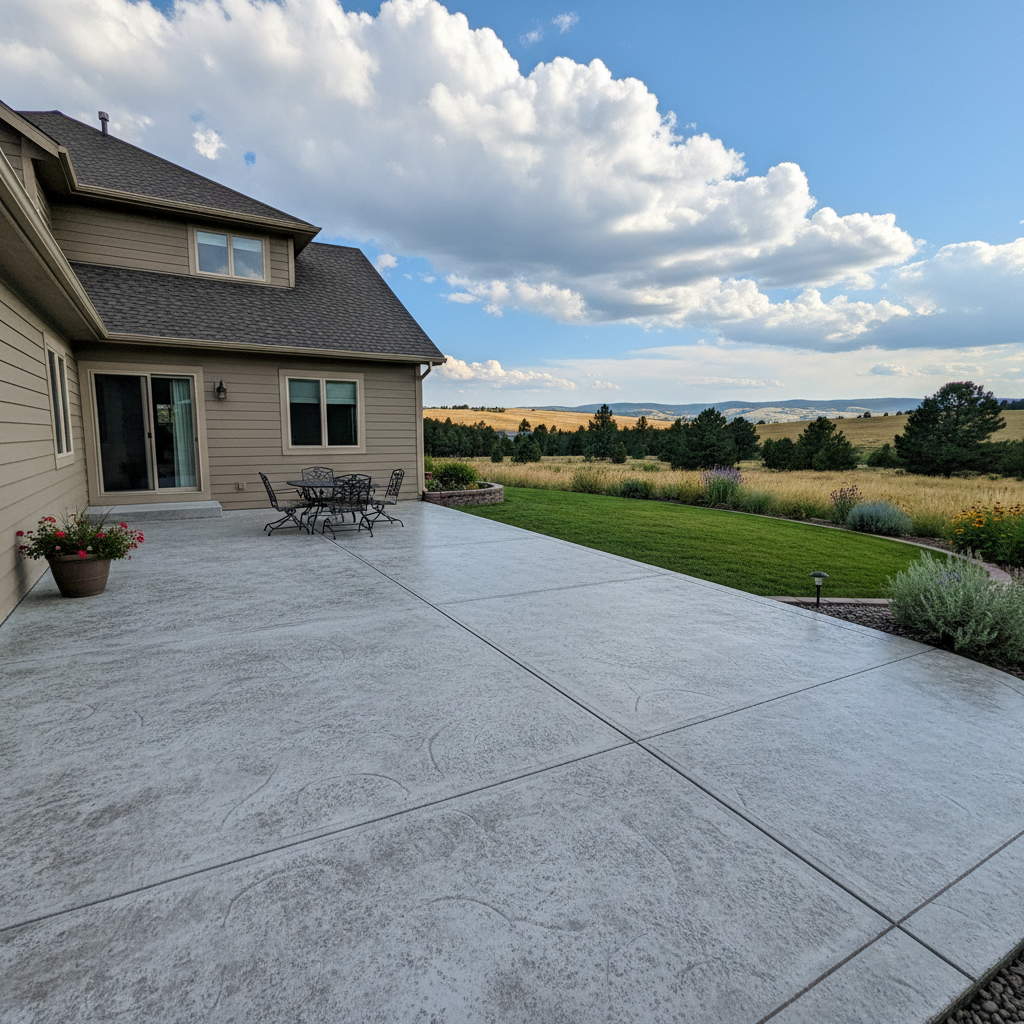
You want your concrete patio to last, right? Of course you do. Nobody puts in a patio just to have it fall apart in a few years. Here in Great Falls, we know a thing or two about harsh weather, and that goes for our concrete too. But with a little common sense and regular care, your patio can easily outlive your mortgage. I've seen concrete patios we poured decades ago still looking fantastic, and it's usually because the homeowners followed some basic steps.
Extending Your Patio's Life: It Starts with Protection
The biggest thing you can do to extend the life of your concrete patio is to keep it sealed. Think of sealant like sunscreen for your concrete. It protects against moisture penetration, freeze-thaw cycles, oil stains, and UV damage. Our Great Falls winters, with their constant freezing and thawing, are brutal on unsealed concrete. Water gets into those tiny pores, freezes, expands, and then thaws, slowly breaking down the surface. A good quality penetrating sealer, applied correctly, stops that process dead in its tracks.
How often should you seal? It depends on the sealer type and how much abuse your patio takes. For most residential patios around here, I recommend resealing every 2-3 years. If your patio gets a lot of sun, heavy foot traffic, or you're constantly spilling things on it, you might want to do it every year or two. It's not a hard job, but it's crucial. Clean the patio thoroughly first – no point sealing in dirt.
Another big one is proper drainage. Make sure water isn't pooling on your patio after a rain or snowmelt. If it is, you've got a problem that needs addressing, whether it's grading issues or clogged drains. Standing water is a concrete killer.
Regular Maintenance: Simple Steps for Lasting Beauty
Keeping your patio clean is pretty straightforward. You don't need fancy chemicals or equipment.
- Sweep it regularly: Get rid of leaves, dirt, and debris. This prevents organic matter from breaking down and staining the surface, and also keeps grit from scratching the sealer.
- Wash it down: A good rinse with a garden hose and a stiff broom (not wire!) once a month or so will do wonders. For tougher grime, a mild detergent like dish soap and warm water works fine. Just make sure to rinse thoroughly.
- Avoid harsh chemicals: Don't use acid-based cleaners, bleach, or anything abrasive unless it's specifically designed for concrete and you know what you're doing. These can strip your sealer and damage the concrete surface.
- Deal with stains quickly: The sooner you tackle a spill, the easier it is to clean. Oil, grease, rust, and even certain plant matter can leave permanent marks if left too long. For oil, try a poultice of kitty litter or baking soda to absorb it, then scrub.
- Snow removal: Be careful with de-icing salts. Many common rock salts can damage concrete, especially if it's new or not properly sealed. Sand is a safer bet for traction. If you must use a de-icer, look for ones labeled 'concrete safe' or 'pet friendly,' which usually contain calcium chloride or magnesium chloride. Better yet, just shovel.
Warning Signs: When to Pay Closer Attention
Your patio will tell you when it's having issues. You just need to know what to look for.
- Fading or dullness: If your colored or stamped concrete is losing its vibrancy, or the surface just looks 'dry,' your sealer is probably worn out and needs reapplication.
- Surface flaking or spalling: This looks like small pieces of concrete breaking off the surface. It's often a sign of water penetration and freeze-thaw damage. If you see this, it's urgent to reseal and protect the remaining surface.
- Cracks: Small hairline cracks are pretty normal; concrete cracks, it's just what it does. But if you see cracks widening, becoming deeper, or if they're accompanied by unevenness (one side of the crack is higher than the other), that's a bigger structural issue.
- Pitting: Small holes or pockmarks on the surface can be caused by aggregate popping out or by de-icing salts. Again, proper sealing helps prevent this.
- Moss or mildew growth: This often indicates poor drainage or a very shaded area that stays damp. It's not just ugly; it can hold moisture against the concrete and make it slippery. Clean it off and consider if you have a drainage problem.
When to Call a Professional (Like Us at Great Falls Concrete Paving)
Look, a lot of patio maintenance is DIY-friendly. But there are times when you need an expert eye. If you're seeing significant cracking, especially if it's lifting or sinking, don't try to patch it yourself. That's usually a sign of sub-base issues or soil movement, which is common with our expansive clay soils around here. We can assess the situation and recommend the right repair, whether it's crack injection, grinding, or even slab jacking.
If you've got extensive spalling or surface damage that's beyond a simple reseal, we can often resurface or overlay the existing concrete, saving you the cost of a full tear-out and replacement. And if you're unsure about what kind of sealer to use, or how to apply it properly for our climate, just give Great Falls Concrete Paving a call. We're happy to give you advice or handle the sealing for you. Investing a little in maintenance now will save you a lot of headaches and money down the road.