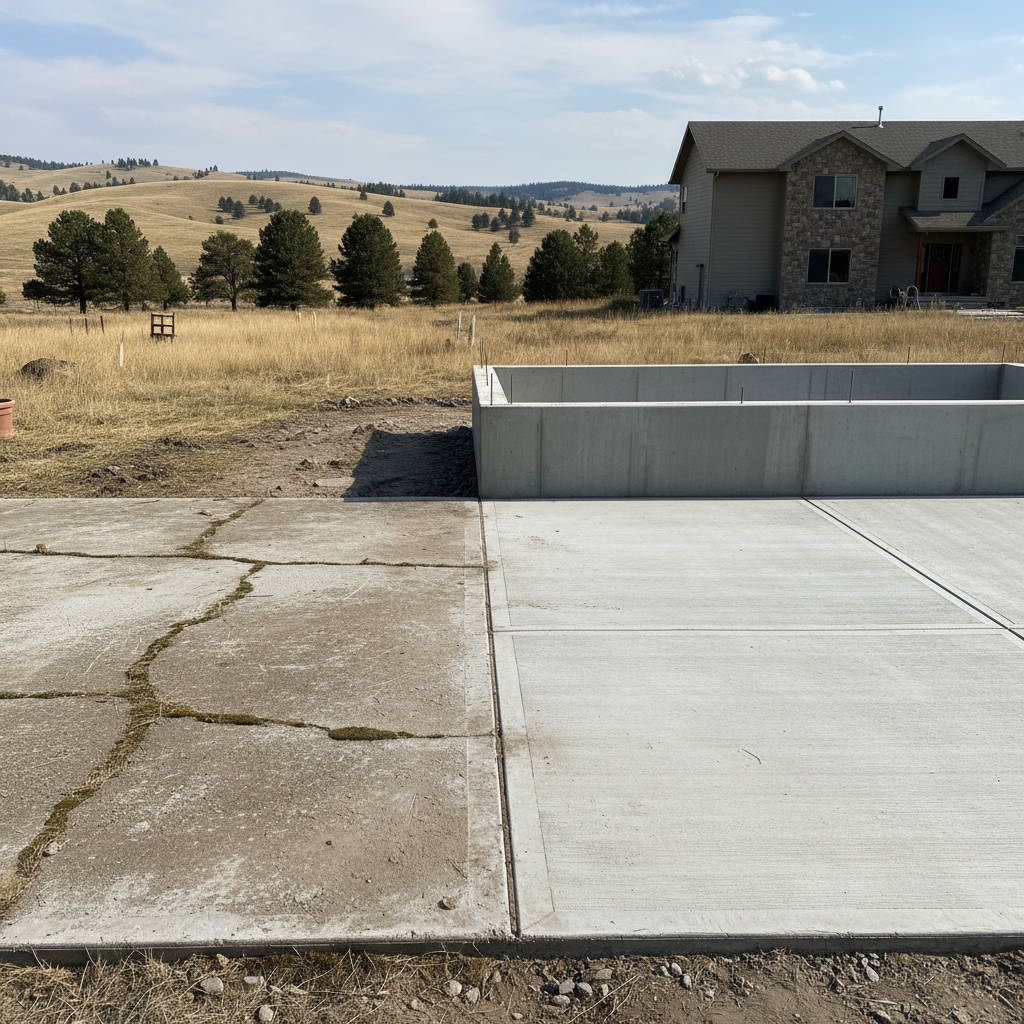
Alright, let's talk foundations. This is one of those decisions you absolutely have to get right from the start, because changing it later? Forget about it. For homeowners here in Great Falls, you're generally looking at two main choices for a new build or a big addition: a slab-on-grade foundation or a crawl space.
Both have their place, sure, but they're not exactly equal, especially when you think about our Montana weather and what the ground here is like. I've poured plenty of both over the years, and I've definitely seen what works and what just doesn't. So, let's dig into the details.
Slab-on-Grade Foundation: The Basics
A slab-on-grade foundation is pretty much exactly what it sounds like. We get the ground ready, put down a vapor barrier, and then pour one single, thick concrete slab right onto the dirt. The edges are usually thicker to form a footing, and we often reinforce it with rebar or mesh throughout. Your house then just sits right on top of this slab.
Pros of a Slab Foundation:
- Cost: Generally, slab foundations are cheaper to put in upfront. There's less digging, you don't need extensive block work or poured walls like you would for a crawl space, and it uses less material overall compared to a full basement or even a crawl space.
- Speed: They're quicker to pour and get ready. Once the ground is prepped and the rebar's in, it's just one big pour, and you're good to go.
- Energy Efficiency: A well-insulated slab can actually be quite energy efficient. It acts like a big thermal battery, helping to keep indoor temperatures steady. Plus, there's no open space underneath for heat to escape, which is a common issue with crawl spaces.
- Pest Resistance: With no open space or wood touching the ground, you're much less likely to have problems with rodents, insects, or other critters trying to set up camp under your home.
- Durability: A slab that's poured and cured correctly is incredibly strong and stable. It's also less likely to settle if we do the ground prep right.
Cons of a Slab Foundation:
- Plumbing Access: This is the big one, honestly. If you get a plumbing leak under the slab, it's a total nightmare. You're looking at jackhammering through concrete just to get to the pipes. That's messy, expensive, and a huge headache for anyone.
- Radon: Great Falls does have areas with higher radon levels. While a good vapor barrier and proper sealing certainly help, it can be tougher to deal with radon effectively in a slab compared to, say, a vented crawl space or a basement with a proper mitigation system.
- Cold Floors: If it's not insulated well, especially around the edges, slab floors can feel pretty cold underfoot during our long winters. Radiant heating systems can fix this, but that's an extra cost, isn't it?
- No Storage: You lose out on any storage space under the house.
Crawl Space Foundation: The Traditional Approach
A crawl space foundation means we dig down a few feet, pour footings, and then build short foundation walls (usually concrete block or poured concrete) that lift the house off the ground. There's enough space for a person to