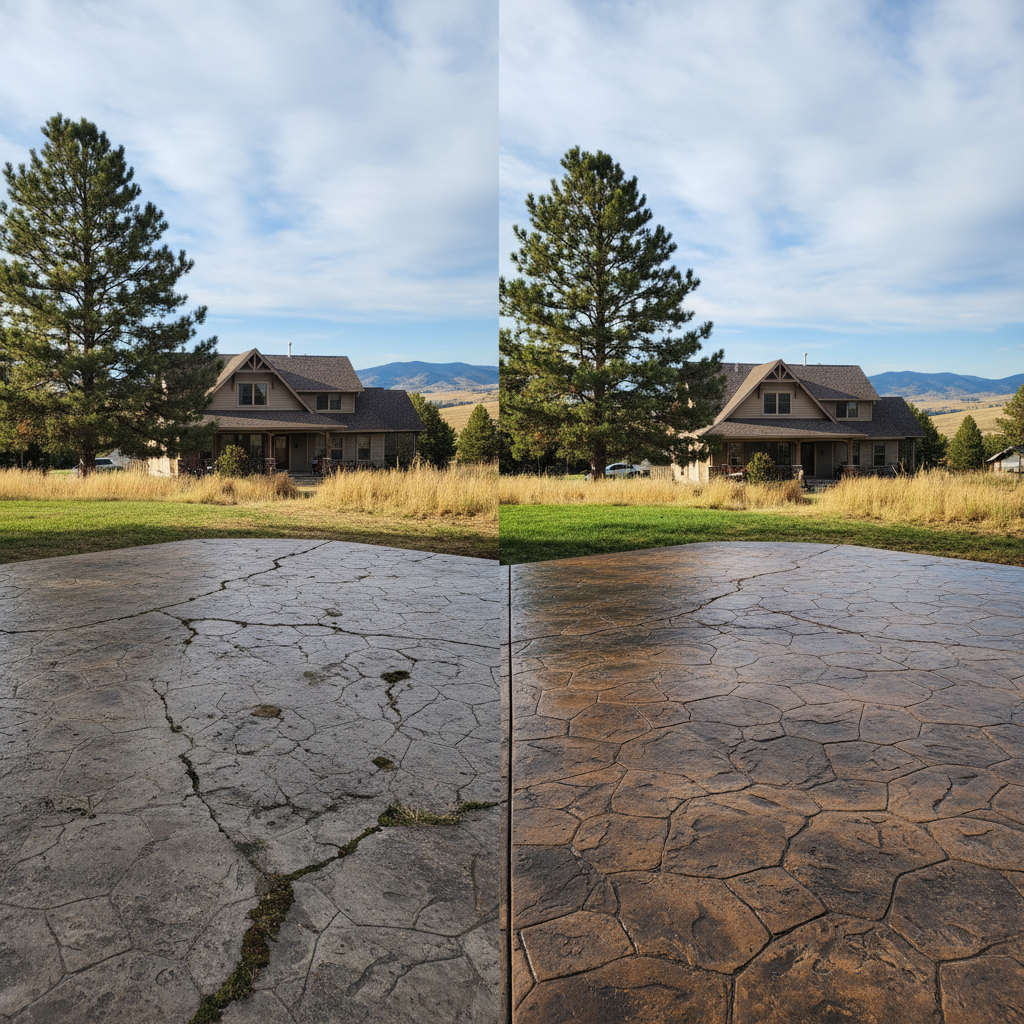
So, you're thinking about stamped concrete. Smart move. It really boosts curb appeal and can totally change how a space feels. But once you start looking into it, you'll quickly find out there isn't just one way to get that beautiful stamped look. For most homeowners right here in Great Falls, it usually comes down to two main options: pouring a brand new slab and stamping it, or putting a stamped concrete overlay on top of concrete that's already there. Both methods have their place, but they're definitely not the same thing. Let's talk about what I've seen work best, especially with our Montana weather.
New Pour Stamped Concrete: The Gold Standard
This is probably what most folks imagine when they hear "stamped concrete." We pour a fresh concrete slab, typically 4-6 inches thick, depending on its purpose. While the concrete is still wet, we add color hardeners and release agents. Then, we press the stamping mats into it to create the pattern and texture. Once it's cured and sealed, boom! You've got a solid, beautiful, and super durable surface.
Pros of a New Pour:
- Durability: You're starting from scratch with a full-depth slab. This is the strongest, most enduring choice. It's built to handle our tough Great Falls winters, those tricky freeze-thaw cycles, and heavy use.
- Flexibility: You get to pick any pattern, any color, and any shape you want. If you're building a new patio or driveway, or maybe completely replacing an old, cracked one, this gives you total design freedom.
- Longevity: With the right installation and maintenance, a new pour stamped concrete slab can easily last 20-30 years, sometimes even longer. It's an investment that really pays off.
- Structural Integrity: You're getting a brand-new, structurally sound surface. No need to worry about what might be hiding underneath.
Cons of a New Pour:
- Cost: This is usually the more expensive choice upfront. You're paying for all the material, excavation, forming, and the labor involved in a full pour.
- Time: It just takes longer from start to finish. There's prep work, pouring, curing time, and then the sealing.
- Demolition: If you're replacing something already there, you'll have the added cost and mess of tearing out the old concrete or asphalt.
Stamped Concrete Overlays: Resurfacing for a New Look
A stamped concrete overlay – sometimes we call it concrete resurfacing or micro-topping – is a different beast entirely. Here, we put a thin layer (usually 1/4 to 3/8 inch thick) of a polymer-modified cement material over an existing concrete slab. Once that layer is down, we can stamp it with patterns and add colors, just like we would with a new pour.
Pros of an Overlay:
- Cost-Effective: Generally, overlays are cheaper than a full tear-out and replacement. You save on demolition and the sheer amount of new concrete.
- Less Invasive: No need for heavy demolition equipment or hauling away tons of old concrete. It's a quicker, cleaner process, which is always nice.
- Quick Turnaround: Installation is usually faster than a new pour, meaning you can start enjoying your new surface sooner.
- Good for Existing, Sound Slabs: If you've got a concrete slab that's in pretty good shape – maybe it's just discolored, stained, or simply boring – but no big structural cracks or settling, an overlay can give it an amazing new lease on life.
Cons of an Overlay:
- Dependent on Substrate: This is the BIG one, folks. An overlay is only as good as the concrete it's applied to. If your existing slab has significant cracks, is heaving, or has drainage problems, an overlay won't fix those underlying issues. Those cracks will probably show through the new overlay eventually.
- Durability: While it's tough for its thickness, it's not as robust as a full-depth new pour. It's more likely to chip or delaminate if the concrete underneath isn't prepped perfectly, or if it takes a serious hit. Our Great Falls freeze-thaw cycles can be pretty hard on overlays if the bond isn't perfect or if water sneaks underneath.
- Limited Thickness: You can't use an overlay to build up a significant height difference.
- Maintenance: You might need to reseal it more often than a new pour to protect that thinner surface.
Which One Should You Choose for Your Great Falls Home?
Here's my honest opinion: for most outdoor projects here in Great Falls – patios, driveways, walkways – I almost always lean towards a new pour stamped concrete, if your budget allows it. Why? Our weather, plain and simple. We get those brutal cold snaps, heavy snow, and then the thaws. That constant freeze-thaw cycle puts huge stress on concrete. A full-depth, properly installed new slab with good drainage is just going to hold up better and longer against those conditions.
And think about the soil around here too. We've got areas with a lot of clay, which expands and contracts with moisture, putting pressure on slabs. A thicker, well-compacted base under a new pour handles that much better.
Now, if you have an existing concrete slab that's in genuinely excellent condition – maybe it's just ugly, or you want to update the look of an old garage floor that sees light traffic – then a stamped overlay can be a fantastic, cost-effective solution. But you really have to be realistic about the condition of that existing concrete. I won't put an overlay over a slab that's already failing; that's just throwing good money after bad. We'd rather do it right, even if it means more work up front.
Ultimately, it comes down to your current situation, your budget, and what you expect in terms of how long it'll last. Give us a call at Great Falls Concrete Paving, and we can come out, take a look at your specific project, and give you a straightforward recommendation. We'll tell you what we think will give you the best value and the longest-lasting results for your home.