What's the difference between concrete and cement?
This is a big one, and folks mix 'em up all the time. Think of it this way: cement is like the flour in a cake recipe. It's a fine powder, a key ingredient. Concrete, on the other hand, is the whole cake. It's a mix of cement, water, and aggregates – that's your sand, gravel, and crushed rock. When you add water, the cement acts as a binder, gluing all those aggregates together to form that hard, durable material we call concrete. So, you don't pour cement; you pour concrete. Cement is just one part of what makes concrete work.
How long does concrete take to cure, and when can I use it?
Alright, so curing is a process, not just a set time. Concrete doesn't just dry out; it undergoes a chemical reaction that makes it strong. The general rule of thumb is that concrete reaches about 70% of its strength in the first 7 days. That's when you can usually start light foot traffic. For vehicles, especially on a new driveway, you really want to wait at least 28 days for it to reach its full design strength. Rushing it can lead to cracks or damage down the road. We always recommend keeping it moist during that initial curing period – sometimes we'll use a curing compound or even just spray it with water a few times a day, especially when it's hot and dry here in Great Falls.
Why does concrete crack, and can it be prevented?
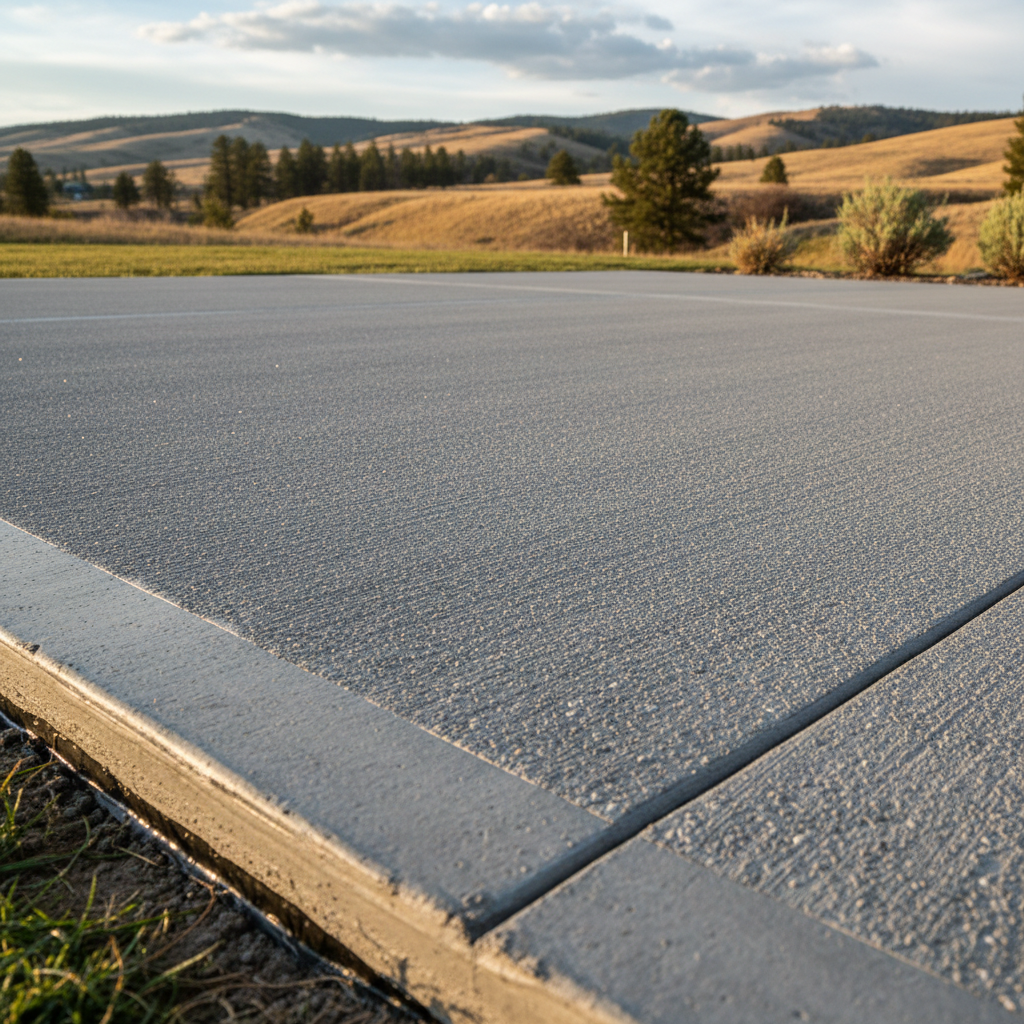
Look, concrete cracks. It's a fact of life, especially with our freeze-thaw cycles here in Montana. It expands when it's warm, contracts when it's cold. The goal isn't to prevent all cracks, but to control where they happen. That's where control joints come in – those lines you see cut or tooled into concrete. We put them in specific spots to create weak planes, so if the concrete is going to crack, it cracks along those lines instead of randomly across your patio or driveway. Proper subgrade preparation, the right concrete mix, and good curing practices all help minimize random cracking. But even with all that, a hairline crack or two can still show up. It doesn't always mean there's a structural problem.
What's involved in preparing the ground for a new concrete pour?
This is probably the most critical step, and it's where a lot of DIY projects go wrong. First, we excavate the area to the right depth. Then, we need to establish a stable subgrade. That often means compacting the existing soil really well. If the soil isn't great – like some of that clay we have around the River's Edge Trail area – we might bring in some gravel or crushed aggregate as a base layer. This base needs to be uniformly compacted too. It provides drainage, helps distribute the load, and prevents settlement. If you skip or skimp on this step, you're just asking for trouble down the line with uneven concrete or more severe cracking.
How do I maintain my concrete flatwork in Great Falls winters?
Winter can be tough on concrete. The biggest thing is to avoid using de-icing salts that contain ammonium sulfate or ammonium nitrate. These can really damage the surface of your concrete, causing it to spall or pit. Stick to sand for traction, or use de-icers that are labeled concrete-safe, like calcium chloride. Also, try to shovel snow promptly. Letting snow melt and refreeze repeatedly on the surface can cause issues. If you've got a new driveway, especially, try to avoid using any de-icers at all for the first year. A good sealer applied every few years can also help protect it from moisture and chemicals.
When is it time to repair or replace my concrete?
That's a judgment call, but here's how I usually look at it. If you've got a few minor cracks, some spalling, or small chips, those can often be repaired. Patching, crack filling, or even resurfacing can extend the life of your concrete. But if you're seeing widespread cracking, significant heaving or settling, large sections crumbling, or if water is consistently pooling in places it shouldn't, then you're probably looking at replacement. Especially if the subgrade issues are severe. Sometimes, trying to patch up a really bad slab is just throwing good money after bad. We can come out and give you an honest assessment – that's what Great Falls Concrete Paving is here for.